There are days I still can’t look at her photo.
Even now, over a year later, I’ll scroll past one in my camera roll or open an old album, and something in me pulls back before I can really see her.
It’s not forgetting—it’s the sharpness of too much remembering.
My body seems to know what I can’t always admit: that even an image of her, still and frozen in time, feels too alive to bear.
And yet, I hear her voice through the silence.
Not in any spiritual or magical sense—just in the way she used to speak, tucked inside the folds of daily life.
I’ll be going about something simple—tidying the kitchen, muttering to myself in the mirror—and suddenly, I’ll hear her.
Not a phrase I’ve been replaying on purpose. Not a memory I called forward.
Just her.
Soft, matter-of-fact. Familiar.
And then, just as quickly, it’s gone again.
What I remember best are her hands.
Square nails. Unmanicured.
Always busy with something—kneading dough, patting soil into a planter, turning over greens in the sink.
She loved to plant. She loved to bake. And she moved through both with a quiet confidence that made the ordinary feel like ritual.
But it was on the couch where her hands taught me something I didn’t yet have words for.
I was small, too young to write my name.
She was teaching me how to crochet.
Yarn wound awkwardly through my fingers, the hook slipping every other second.
I sat close beside her, practically leaning into her side, and her hands reached around mine—correcting, steadying.
She wasn’t endlessly patient—not even close. But in those moments, she tried.
She stayed long enough for the motion to take root in me.
She showed me how to hold tension just right. How to pull through. How to start over when it didn’t look right.
Without knowing it, she was teaching me how to make something out of nothing.
How to begin again, stitch by stitch.
Years passed.
I moved into young adulthood.
A space of my own. A schedule that was mine to shape. Responsibilities that stretched me in ways both beautiful and exhausting.
And in the middle of learning how to be grown, I started to notice changes in her too.
She moved a little slower. Stayed in more.
Her moods shifted. She seemed more easily overwhelmed by things that used to roll off her.
The garden sat untouched for longer stretches. The scent of fresh bread or cake became occasional, rather than expected.
It wasn’t dramatic.
There was no defining moment.
But I felt the shift.
She was moving through something we didn’t name at the time.
The change, they called it.
That season of physical and emotional recalibration that women are expected to survive in silence.
She didn’t speak of it. And I didn’t know how to ask.
So we moved around each other, both slightly altered, both unsure.
She was still present—but I could feel her reaching for a version of herself that no longer came so easily.
Eventually, she grew smaller.
Not just in body, but in presence.
Her movements were gentler, her energy thinned.
She pulled back from things she once engaged with fully—from the garden, from long phone calls, from the little everyday rituals that once marked her rhythm.
That was hard to witness.
She had never claimed to have all the answers.
But her presence had always been a kind of anchor.
You felt her when she walked into a room, even if she said nothing.
And slowly, I could sense that she was fighting hard to hold on to the steadiness she once held without question.
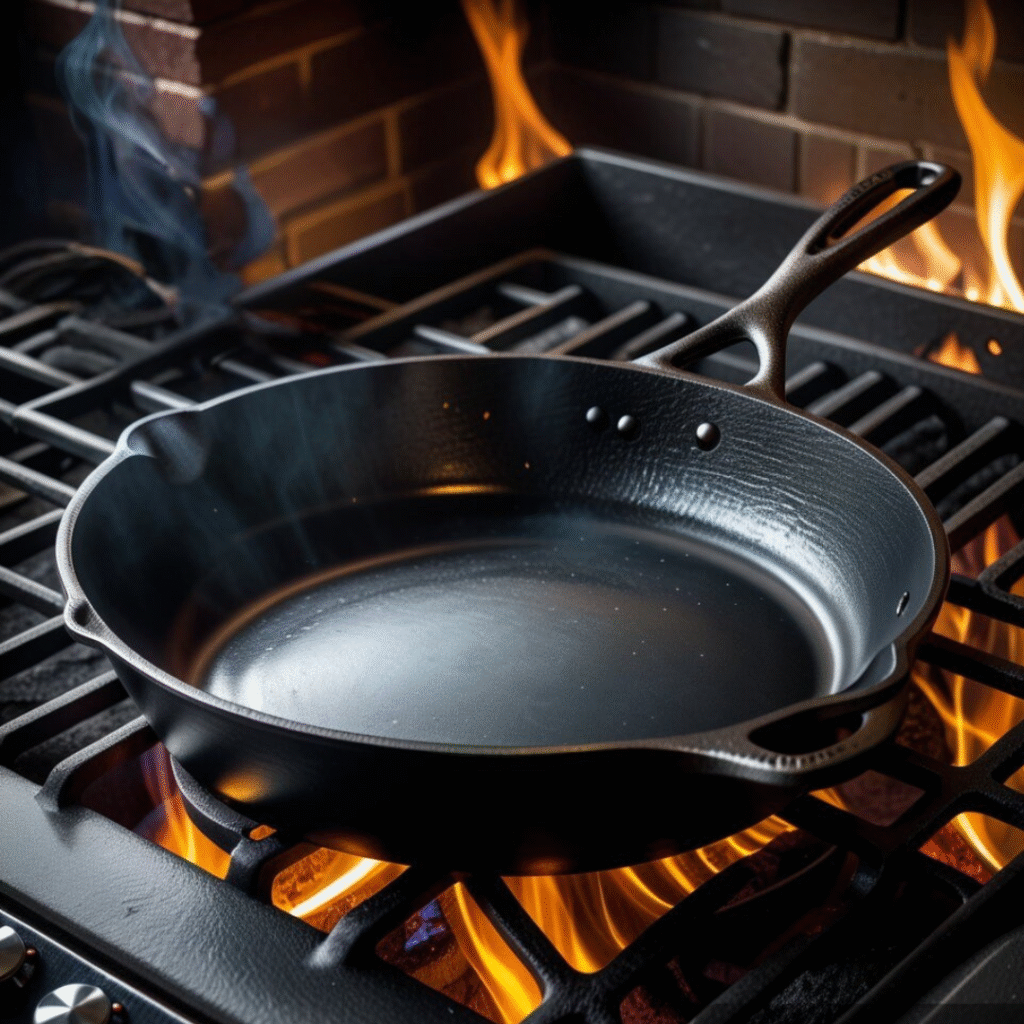
Recently, I bought a cast iron skillet.
Brand new. Still in its untouched state, sitting on my stove like it belongs to someone else.
I don’t want to look up some tutorial on YouTube. I don’t want to ask anyone else.
I just want her.
She would’ve known exactly what to do.
She would’ve told me what oil to use.
How hot the pan should get before the swirl.
What not to cook in it—what would stick or strip the seasoning.
She would’ve told me how to store it, how to bring it back if I ever let it rust.
And maybe—probably—she would’ve stood over me with that look: half love, half critique.
And said something like,
“You’re not doing it wrong. Just not quite right yet.”
But now it’s just me. And the skillet.
And the silence between us.
There’s no neat ending here.
No wisdom to wrap this in.
Just this:
I miss her.
And I still don’t know what to do with this skillet.